Americas | Darkforce
108 Wild Basin Road South, Suite 250
Austin, TX 78746
555 Fayetteville Street, Suite 300
Raleigh, NC 27601
Washington, DC
Coming Soon
108 Wild Basin Road South, Suite 250
Austin, TX 78746
Raleigh, NC 27601
Coming Soon
::: SECURITY NOTICE :::
Comprehensive technical disclosures can reveal potential avenues for an attack. Darkforce ™ deliberately restricts information shared publicly to minimize exposure and safeguard our customers, placing security first. To request detailed documentation and technical specifications, complete the New User Registration Form. Each submission undergoes review against our established client onboarding requirements, with approval contingent on meeting those standards to uphold the highest levels of security and integrity.
What defines Darkforce™?
Darkforce™ delivers cryptographic execution-control and data-protection capabilities across AI, infrastructure, applications, systems, and information, engineered to address the post-quantum landscape.
Why is this important?
Conventional defenses focus on identities, access rights, permissions, and threat detection. Darkforce™ extends protection into runtime, determining whether consequential operations may proceed while safeguarding sensitive information and the execution authority required by the systems involved.
How are Darkforce™ planes organized?
Darkforce™ integrates distinct security planes that assign cryptographic protection, governance, execution control, and storage their functions.
Darkforce Field™
Cryptographic Plane. Delivers quantum-ready, ransomware-resilient safeguards for information and execution authority.
Darkforce Seer™
Intent & Governance Plane. Evaluates operational intent and applies governance informed by context.
Darkforce Nexus™
Execution-Control Plane. Regulates runtime execution authority cryptographically before consequential operations can proceed.
Darkforce Halo™
Self-Hosted Storage Plane. Keeps protected information and execution-control assets under client-managed storage and sharing.
Darkforce Arc™
Security Console. Centralizes operational oversight across execution control, governance, telemetry, audit, and compliance.
Cryptographic Plane. Delivers quantum-ready, ransomware-resilient safeguards for information and execution authority.
Intent & Governance Plane. Evaluates operational intent and applies governance informed by context.
Execution-Control Plane. Regulates runtime execution authority cryptographically before consequential operations can proceed.
Self-Hosted Storage Plane. Keeps protected information and execution-control assets under client-managed storage and sharing.
Security Console. Centralizes operational oversight across execution control, governance, telemetry, audit, and compliance.
How is protected data stored?
Darkforce Halo™ accommodates varied organizational requirements for hosting, sovereignty, compliance, and operations. Through Halo™, organizations maintain greater control over storage locations for their protected information and associated execution-control assets.
Which cloud environments can support Darkforce™ deployments?
Darkforce™ uses cloud-agnostic architecture to accommodate flexibility. Available and planned environments depend on product selection, customer needs, and compliance boundaries. Ask Darkforce™ about currently supported environments.
Which language underpins your core platform?
Go serves as Darkforce’s™ principal platform development language.
Which TLS version does the platform support?
Supported Darkforce™ environments employ TLS 1.3 alongside quantum-ready cryptographic safeguards. Approved technical documentation details the cipher suites, post-quantum algorithms, handshake design, and configurations applicable to individual deployments.
SDK
Darkforce™ SDK libraries and interfaces embed execution control, governance, cryptographic safeguards, and protected data operations within the applications and systems you develop.
CLI
Build and operate Darkforce™ applications and infrastructure from your command shell. Our CLI supports scaffolding, development, testing, deployment, and management through command-line operations.
API
Connect authorized applications to Darkforce™ services through APIs covering governance, execution control, cryptographic safeguards, storage, telemetry, and additional capabilities.
Integration
Explore the Darkforce™ product and service portfolio below, with access to documentation supporting each capability and its integration.
Darkforce Field™
Darkforce Field™ delivers the platform’s cryptographic layer. FIELD safeguards sensitive information and execution authority through quantum-ready, ransomware-resilient protection designed to reduce persistent cryptographic exposure across the Darkforce™ architecture.
Darkforce Seer™
Darkforce Seer™ supplies the platform’s intent and governance layer. SEER determines intent and applies contextual governance to attempted operations originating from users, applications, systems, autonomous agents, or any form of adversarial activity.
Darkforce Nexus™
Darkforce Nexus™ establishes the execution-control layer. NEXUS™ applies cryptographic controls at runtime to determine whether execution authority may exist before consequential operations proceed.
Darkforce Halo™
Darkforce Halo™ delivers self-hosted storage integrated with the Darkforce™ platform, giving organizations greater control over protected information, AI resources, and assets supporting execution control within their environments.
Darkforce Arc™
Darkforce Arc™ brings oversight into a console, supporting visibility and management of governance, execution control, telemetry, compliance, audit, and protected information.
Quantum Entropy Service
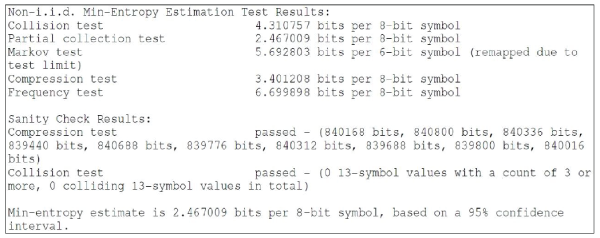
Quantum Entropy Service supplies nondeterministic randomness for key encryption and related operations using a quantum random number generator (QRNG) grounded in quantum mechanics. Every QRNG device undergoes testing against NIST SP800-90 and Dieharder 2 standards. Its entropy originates from electron-tunnelling shot noise within a doped semiconductor P-N junction. An on-demand, conditioned entropy pool supports intensive encryption workloads. Buffering and failover maintain service continuity, while replenishment occurs whenever available entropy drops beneath the configured threshold. Darkforce draws on QRNG-derived entropy for all encryption and execution-control operations. Users obtain random numbers for key encryption and other tasks from our online Linux-based servers. API access provides a programmatic route to the available entropy service. This service makes quantum-derived random numbers available for consumption by applications through the provided entropy access interface.‡